
We don't write code.
We manage what does.
Orchestrate parallel AI coding agents in sandboxed environments. Each agent gets its own network namespace, VCS workspace, and database — fully isolated at the kernel level. No containers, no conflicts, no security risks.
The orchestration platform for agentic coding at scale.
Managing agents
is still chaos.
AI agents write 80% of new code. The $78B market built zero infrastructure for running them safely in parallel. No isolation, no coordination, no visibility. Every team hits the same walls.
Why agents need their own workspaceEnvironment Conflicts
Multiple agents sharing one filesystem. Merge conflicts, broken dependencies, wasted compute. Every. Single. Run.
Zero Observability
No real-time insight into what agents are doing. You wait for output, then debug after the fact — if you're lucky.
Uncontained Agents
Agents with full access to your network, credentials, and filesystem. No sandboxing, no boundaries. One rogue API call away from a security incident.
Your colonies,
orchestrated.
Kernel-level isolation, zero overhead, full observability — so you can run agents without worrying about security.
Parallel Agents
Run unlimited agents simultaneously. Each one sandboxed in its own network namespace — isolated at the kernel level.
Live Preview
Watch agents work in real-time. Web, terminal, and logs — all in your browser.
Zero Containers
Linux network namespaces give you VM-level network isolation without Docker overhead. Instant startup, zero memory cost.
Jujutsu VCS
Every agent gets its own workspace. Automatic conflict resolution, no merge hell.
Full Lifecycle
Spawn, monitor, review, and merge — from Stem or Bloom.
See It in Action
A unified control plane for every agent, colony, and brood — from high-level orchestration down to individual file diffs.
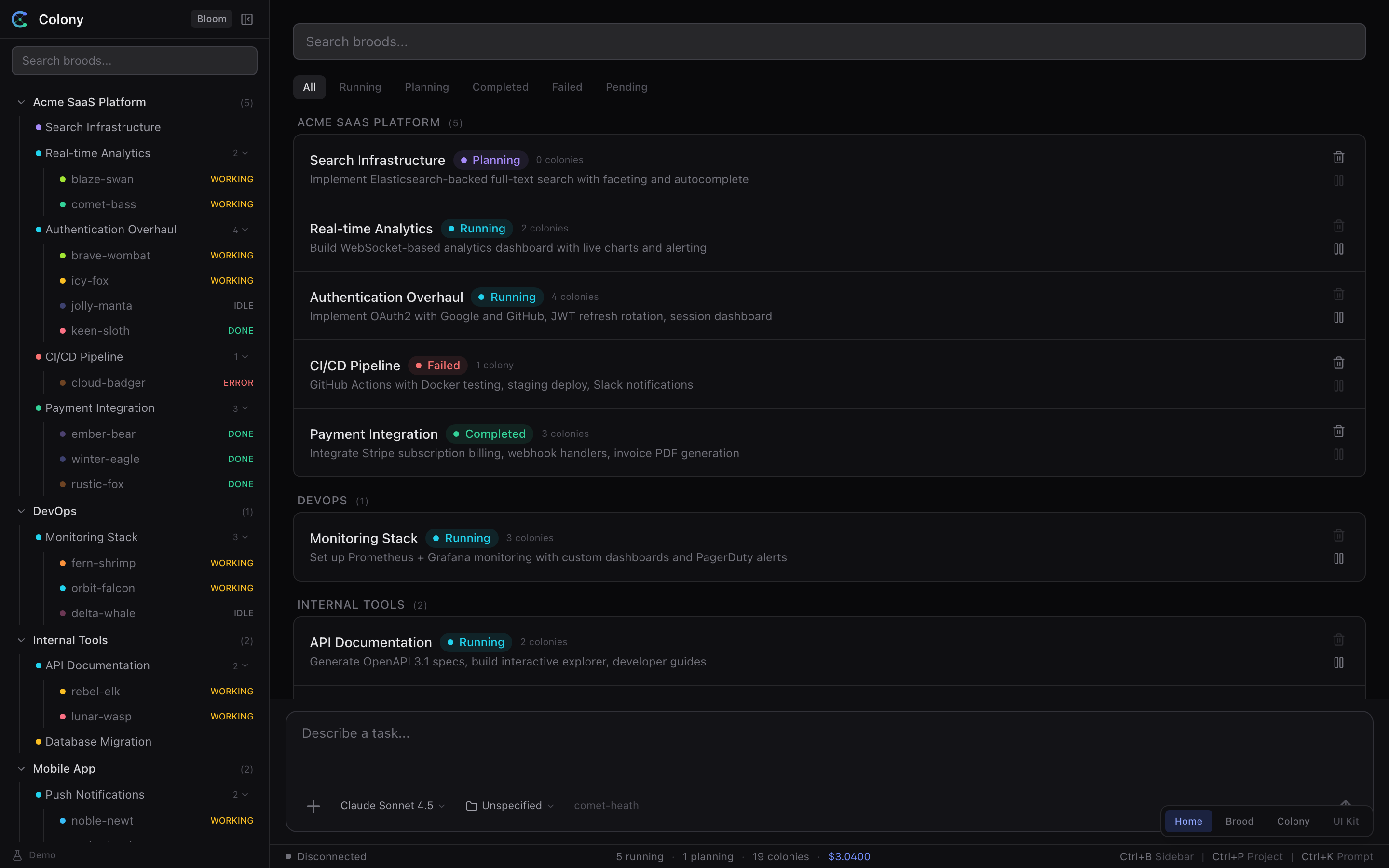
Broods grouped by project, live agent status, one-click creation.
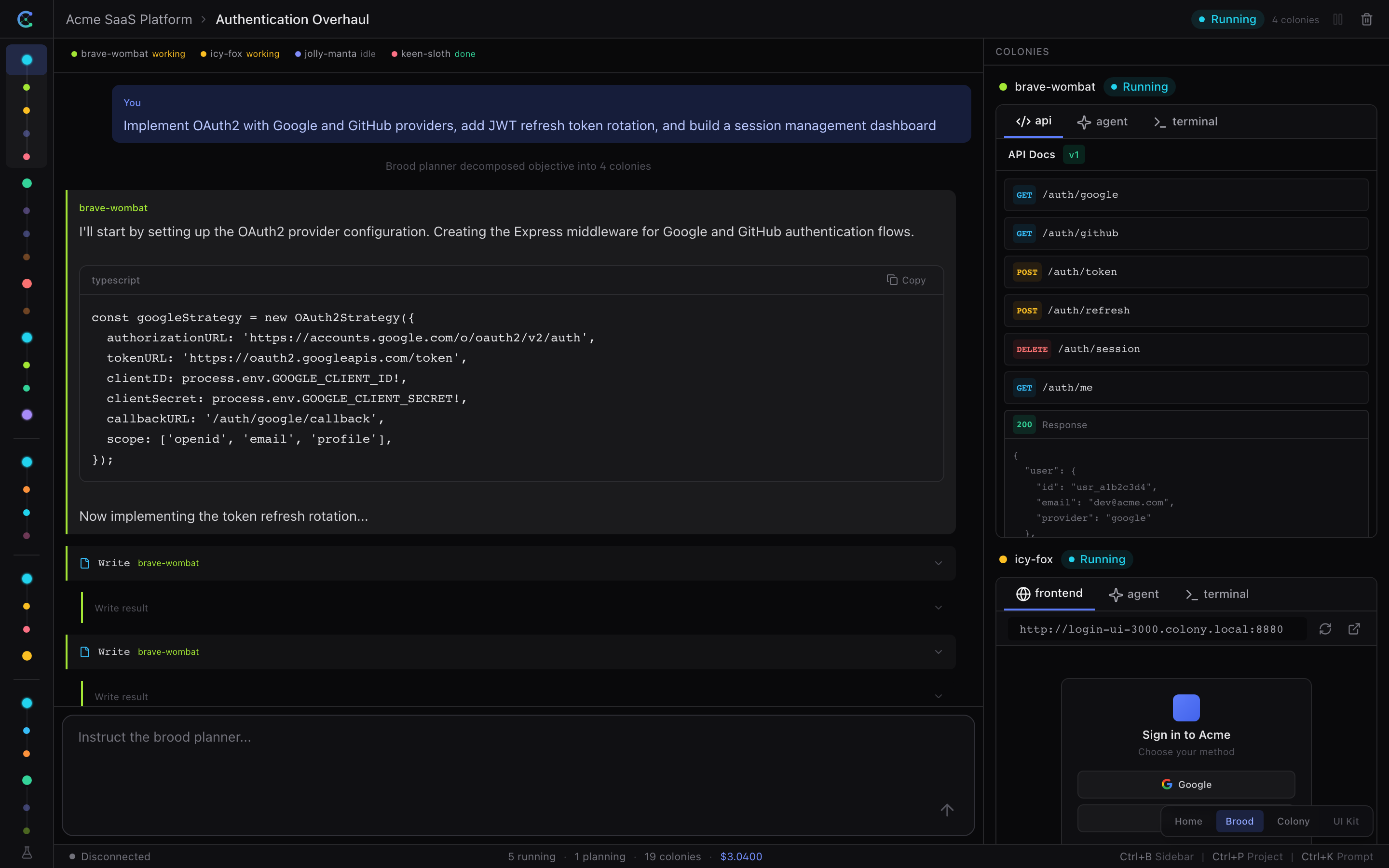
Chat with your brood planner while agents work in parallel colonies.
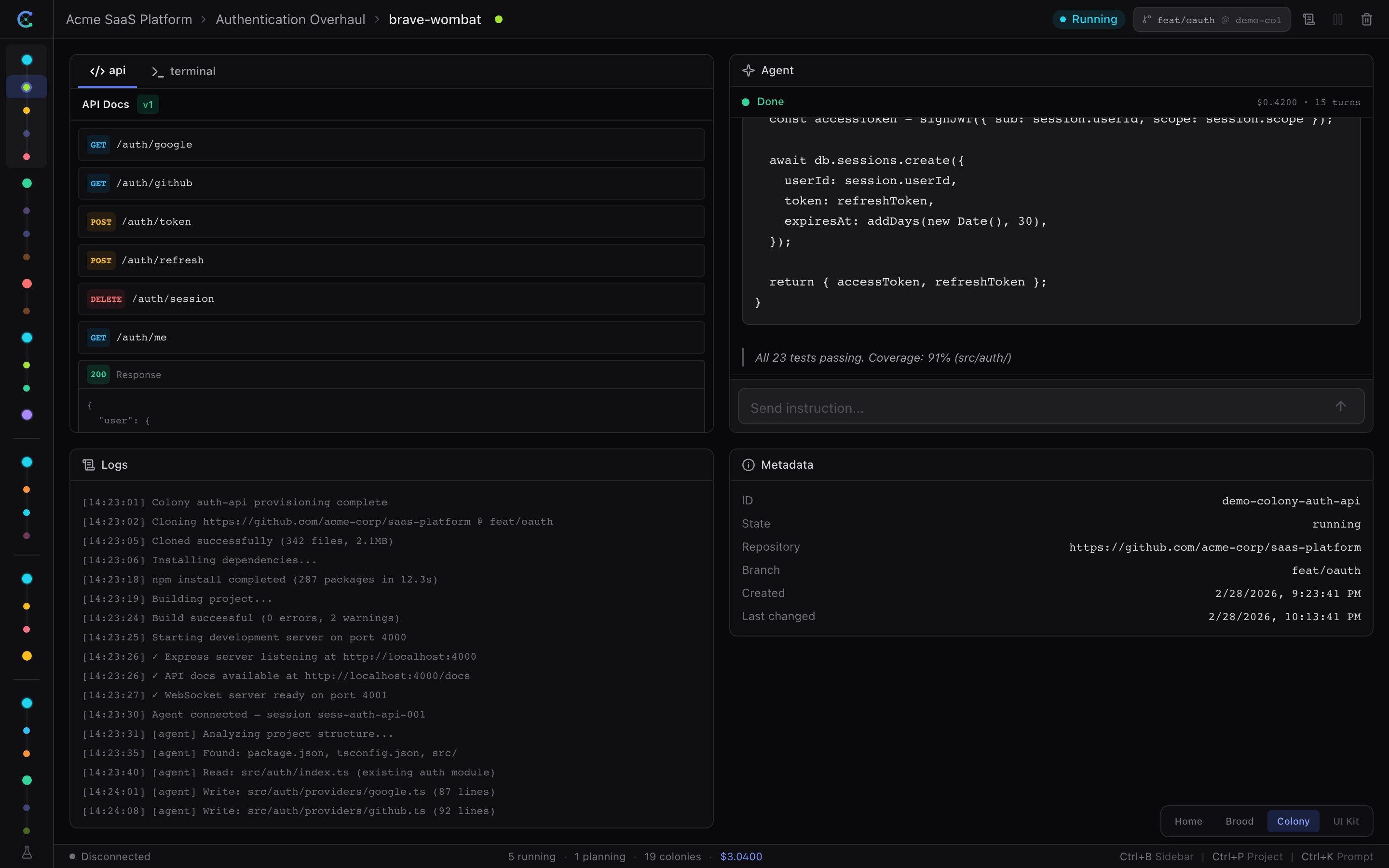
Live service preview, agent conversation stream, logs, and metadata.
How It Works
Define
Create a colony.toml with your project config, agent instructions, and environment requirements.
Spawn
Colony sandboxes each agent in its own network namespace, database, and VCS workspace. Full kernel-level isolation — agents can't see each other or reach your host network.
Review & Merge
Monitor progress in real-time. Review changes, run tests, and merge — all from one dashboard.
Frequently Asked Questions
What AI agent does Colony use?
Why not just use Docker?
Are AI agents secure in Colony?
What is Jujutsu?
Is Colony open source?
How does pricing work?
What is AI agent orchestration?
Ready to
orchestrate?
Colony is launching soon. Join the waitlist for early access and help shape multi-agent development.
No spam — we'll notify you when early access opens.
Read the documentation